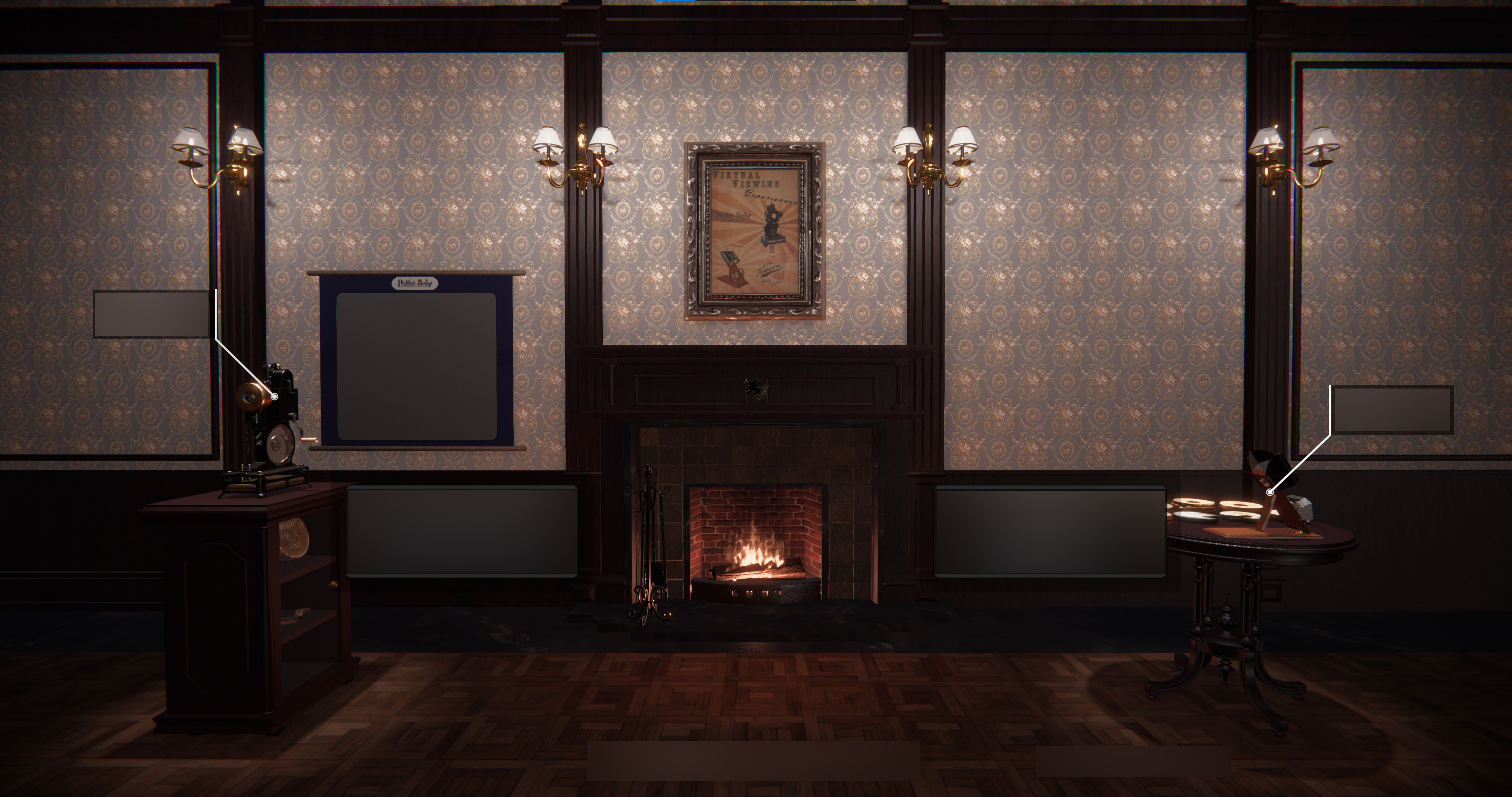
Virtual Viewing Experiences
Immersive Visualizations of Early-Twentieth-Century Home Cinema
Virtual Viewing Experiences is a cultural heritage project that explores how early-twentieth-century home cinema technologies can be reimagined through immersive digital media, by virtually reconstructing two historical devices, a Kinora viewer and a Pathé Baby projector, and exhibiting them side-by-side, within a virtual environment.
Download(Zenodo)About the Project
Authors: Theodoros Georgiakakis & Tim van der Heijden
Developed as a standalone computer application, it is able to transform archival objects into an interactive experience that brings their material presence and original viewing practices back to life. Users are invited to engage with these early media technologies in a virtual domestic setting, blending cultural heritage, digital storytelling, and experiential learning. Rather than simply displaying digitized artifacts alongside their historical data, it creates a narrative environment where historical media can be “used” again, offering a hands-on encounter with the past. Positioned within broader efforts to enrich and promote cultural heritage through digital means, the project demonstrates how immersive 3D environments can support public engagement, education, and the reinterpretation of historical media practices.
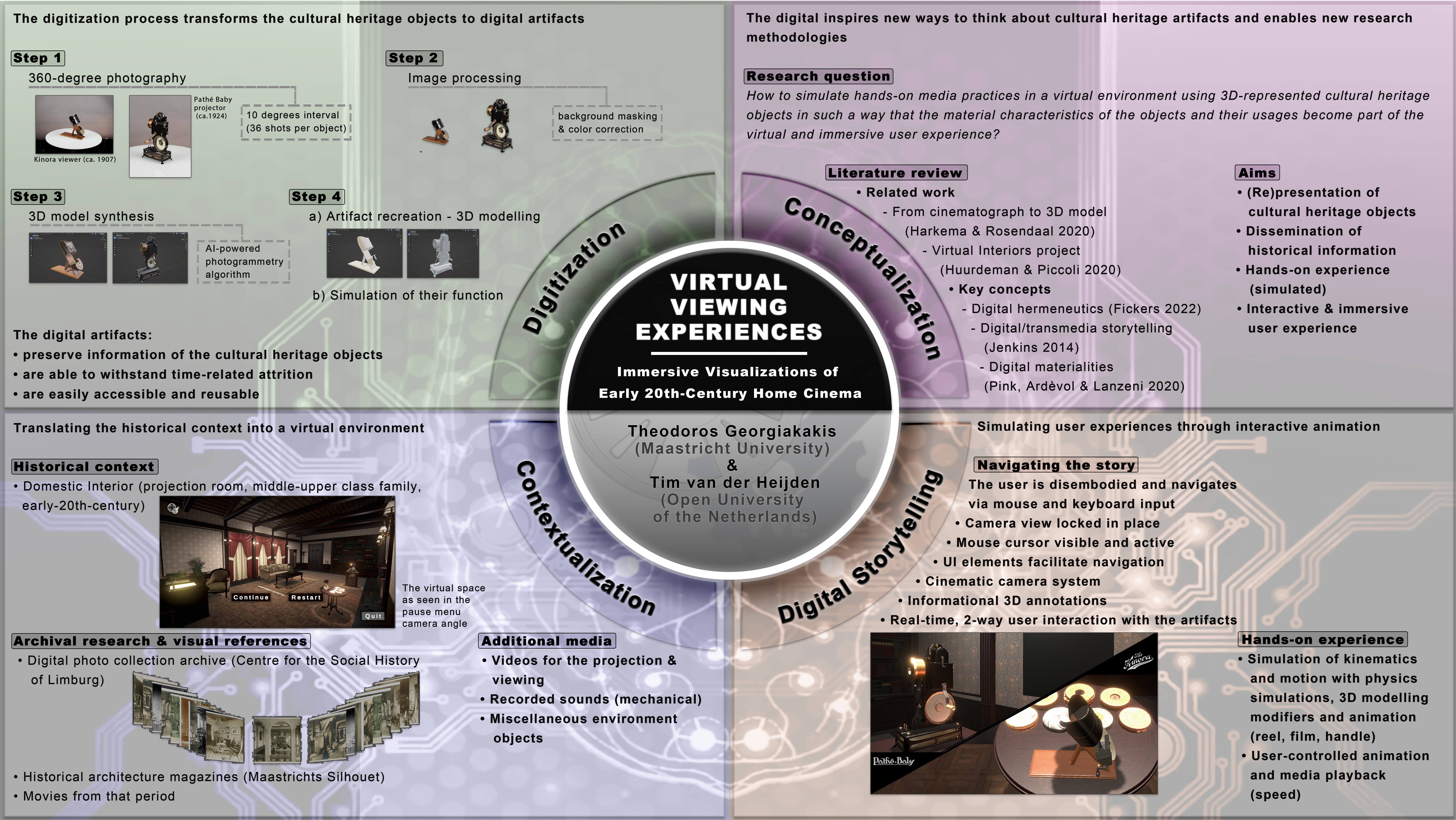
The application development was carried out in four stages: (1) digitization, (2) conceptualization, (3) contextualization, and (4) digital storytelling. User Experience (UX) Design improvements were implemented following the presentation of the prototype application at the international Digital Humanities conference DHBenelux 2023 and its publication of the respective peer-reviewed article in the DHBenelux Journal — Volume 6.
This project was developed by Theodoros Georgiakakis and Tim van der Heijden, within the framework of a research internship at the Open University of the Netherlands in collaboration with Maastricht University, the Netherlands. It was conducted in support of the project ‘CRAFTED: Enrich and promote traditional and contemporary crafts’, co-financed by the Connecting Europe Facility of the European Commission.

Digitization
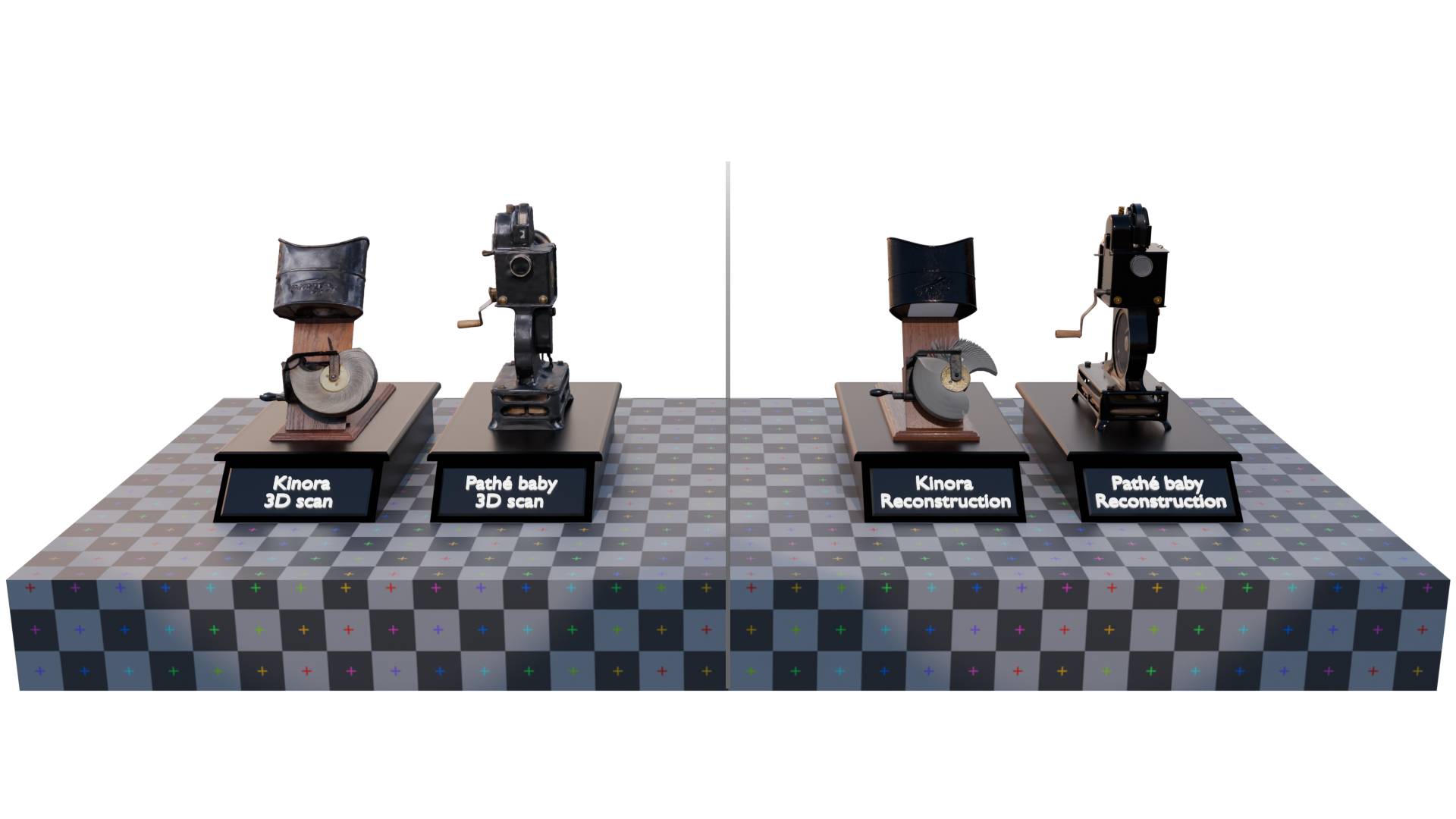
The process began with the systematic digitization of early-twentieth-century home-cinema devices, carried out as part of a broader cultural-heritage initiative. Each object was photographed in a professional 360-degree studio setup, using a rotating platform and high-resolution imaging to capture every angle. These image sets were then processed—cropped, cleaned, and prepared—to create full 360-degree views.
Through photogrammetry, the photographs were synthesized into initial 3D models, which served as accurate visual references for later stages of reconstruction. This digitization phase transformed the physical artifacts into detailed digital surrogates, preserving their visual characteristics and enabling their reuse in immersive, interactive environments.
Conceptualization
During the conceptualization phase, the project shifted from digitized objects, to imagining how these early home-cinema technologies could be meaningfully re-experienced in a virtual environment. This stage focused on defining the interpretive framework: how to translate the material qualities, user practices, and historical contexts of the Kinora viewer and Pathé Baby projector into a coherent digital experience.
Drawing on ideas of digital materiality and digital hermeneutics, the project explored how virtual reconstructions could not only represent the devices but also evoke their original modes of use through interaction, immersion, and narrative design. Influenced by comparable digital-heritage projects, the conceptualization process established the foundations for an application that blends 3D visualization, user agency, and storytelling to reanimate historical media technologies in a contemporary, experiential form.
Contextualization
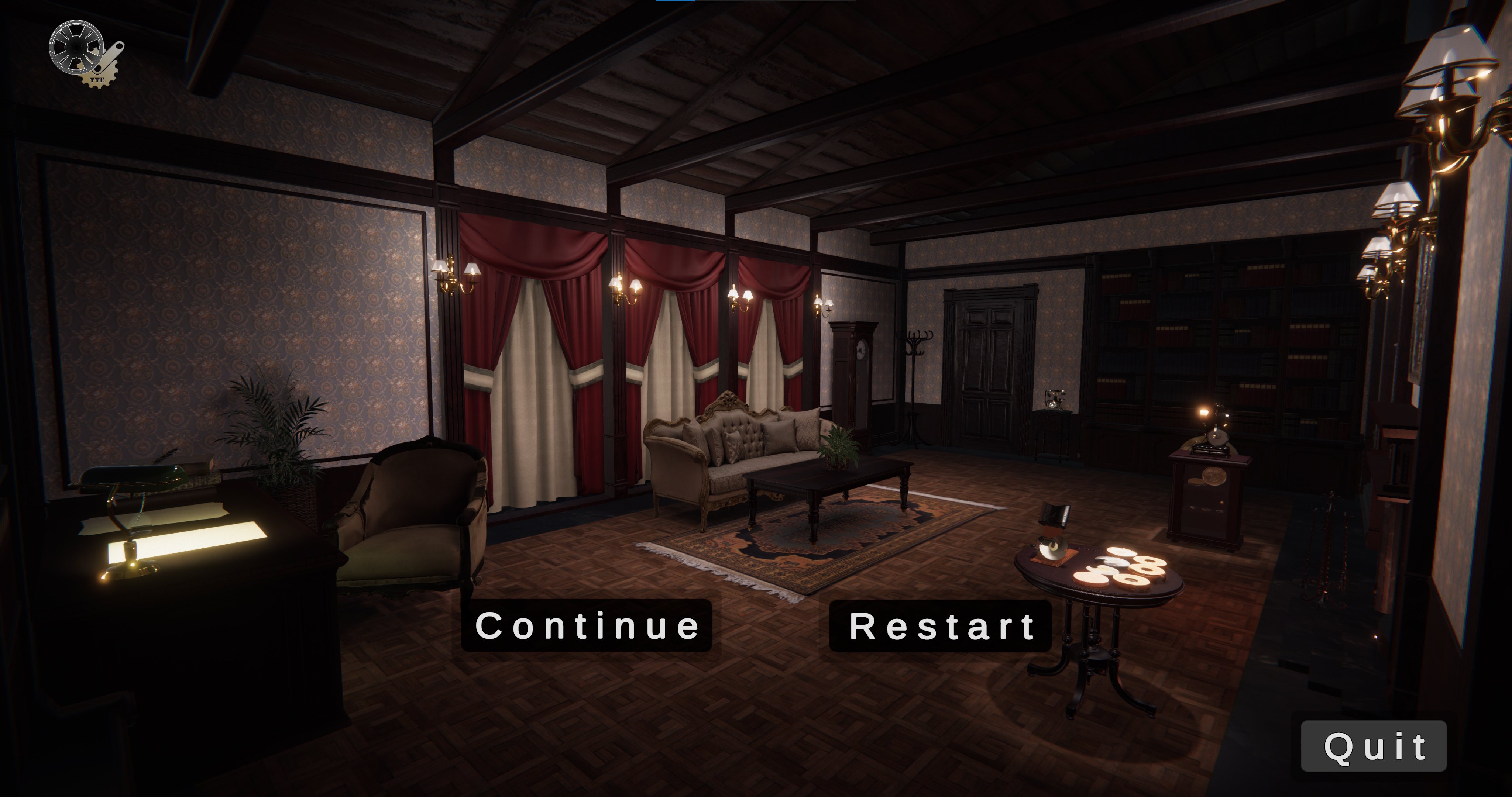
In the contextualization phase, the project focused on placing the digitized home-cinema devices back into a meaningful historical setting, transforming them from isolated 3D models into artifacts embedded within their original cultural and domestic environments.
This involved designing a virtual early-twentieth-century interior inspired by archival photographs, selecting furnishings and decorative elements that evoked the period, and integrating historically informed details about how the Kinora viewer and Pathé Baby projector were used in practice. Beyond the room itself, contextualization also included incorporating the media these devices once displayed, as well as the mechanical sounds and user practices associated with them.
Through this spatial, functional, and sensory framing, Virtual Viewing Experiences reconnected the objects with their historical context, enabling users to experience them not as abstract digital replicas but as technologies situated within the everyday domestic culture of their time.
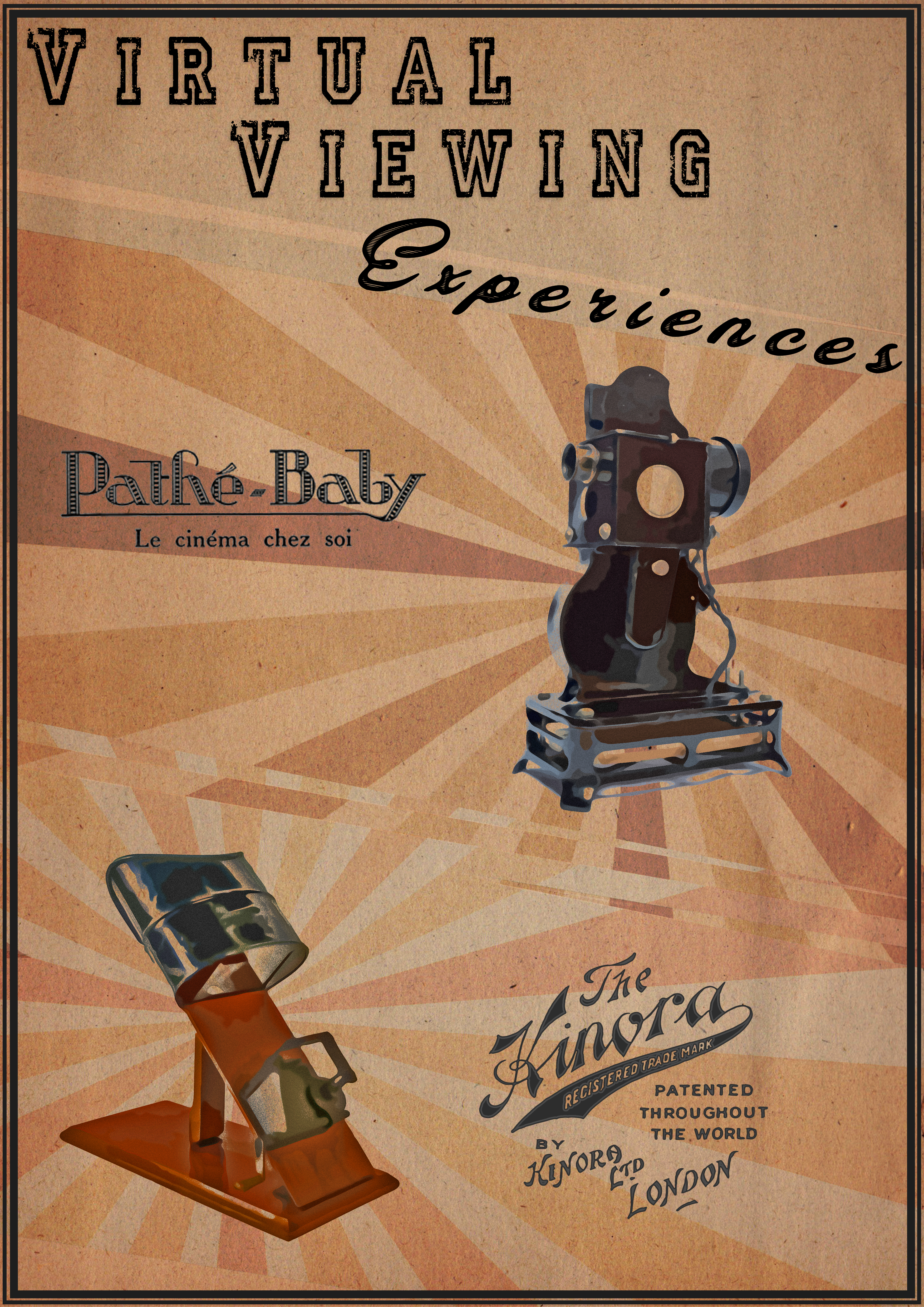
Digital Storytelling
In the digital storytelling phase, the project brought together all the visual, auditory, and interactive elements of the virtual environment to craft an engaging narrative around the two early home-cinema devices.
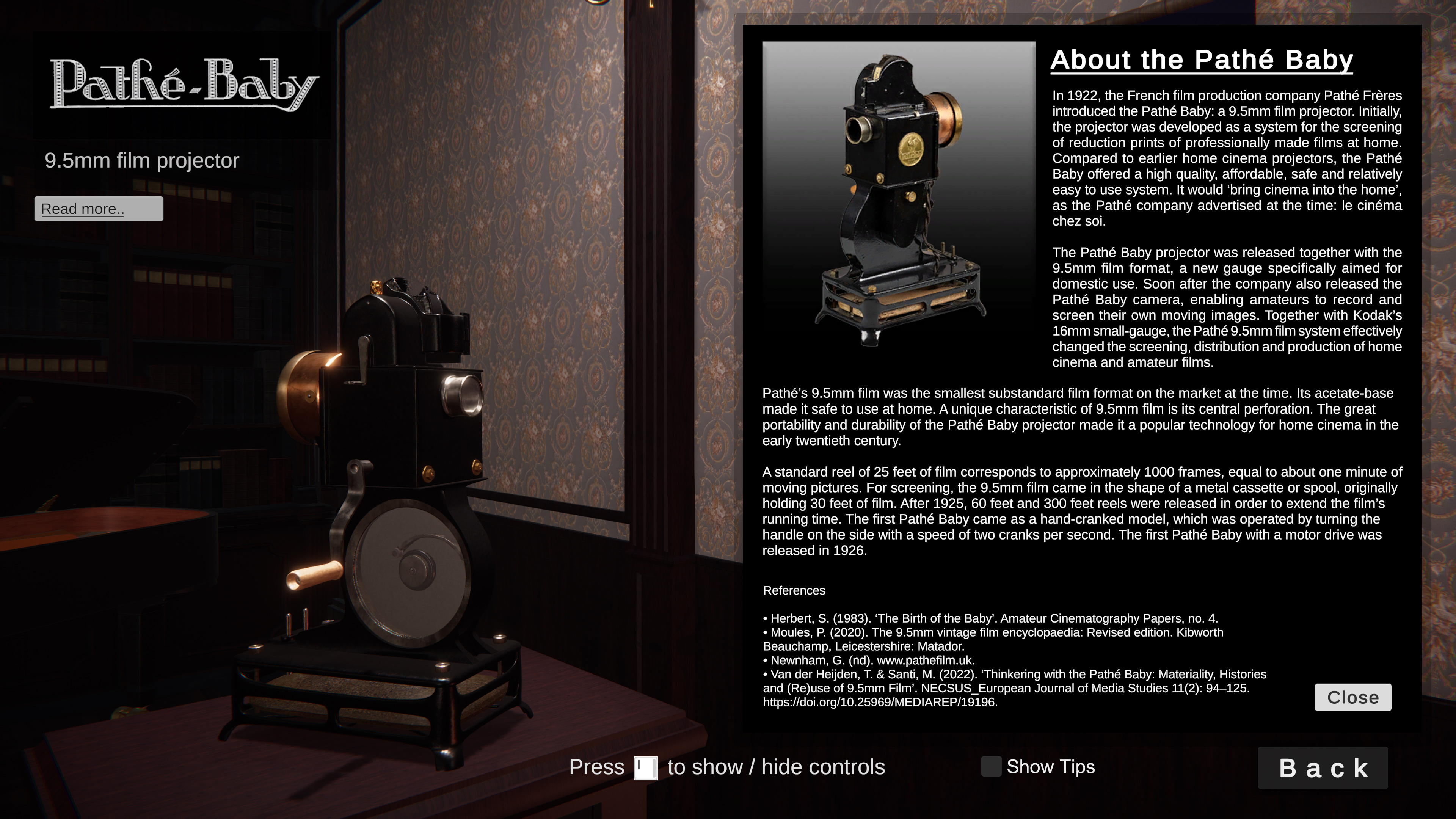
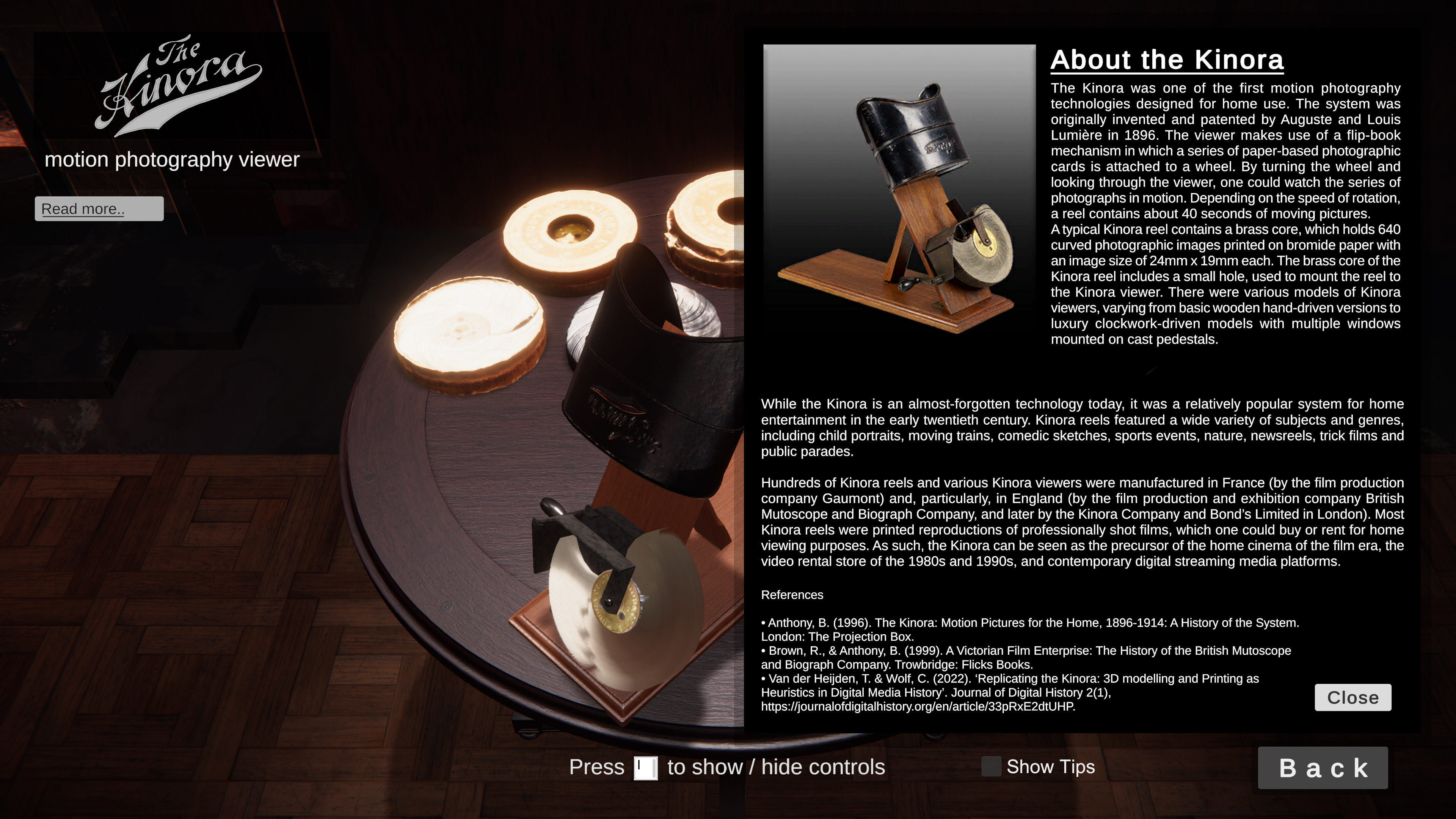
Rather than presenting the Kinora viewer and Pathé Baby projector as static 3D models, the application uses interactivity to transform users into active participants who could operate the devices, control playback, and explore their functions at their own pace. This approach layered visuals, sound, historical information, and hands-on interaction into a cohesive narrative structure, allowing users to experience the devices’ materiality and historical usage through a dynamic, non-linear journey. By giving users choice and agency, the digital storytelling design turned the virtual environment into an immersive learning space where historical media technologies could be “re-animated” and understood through a hands-on engagement with them.
UX Design
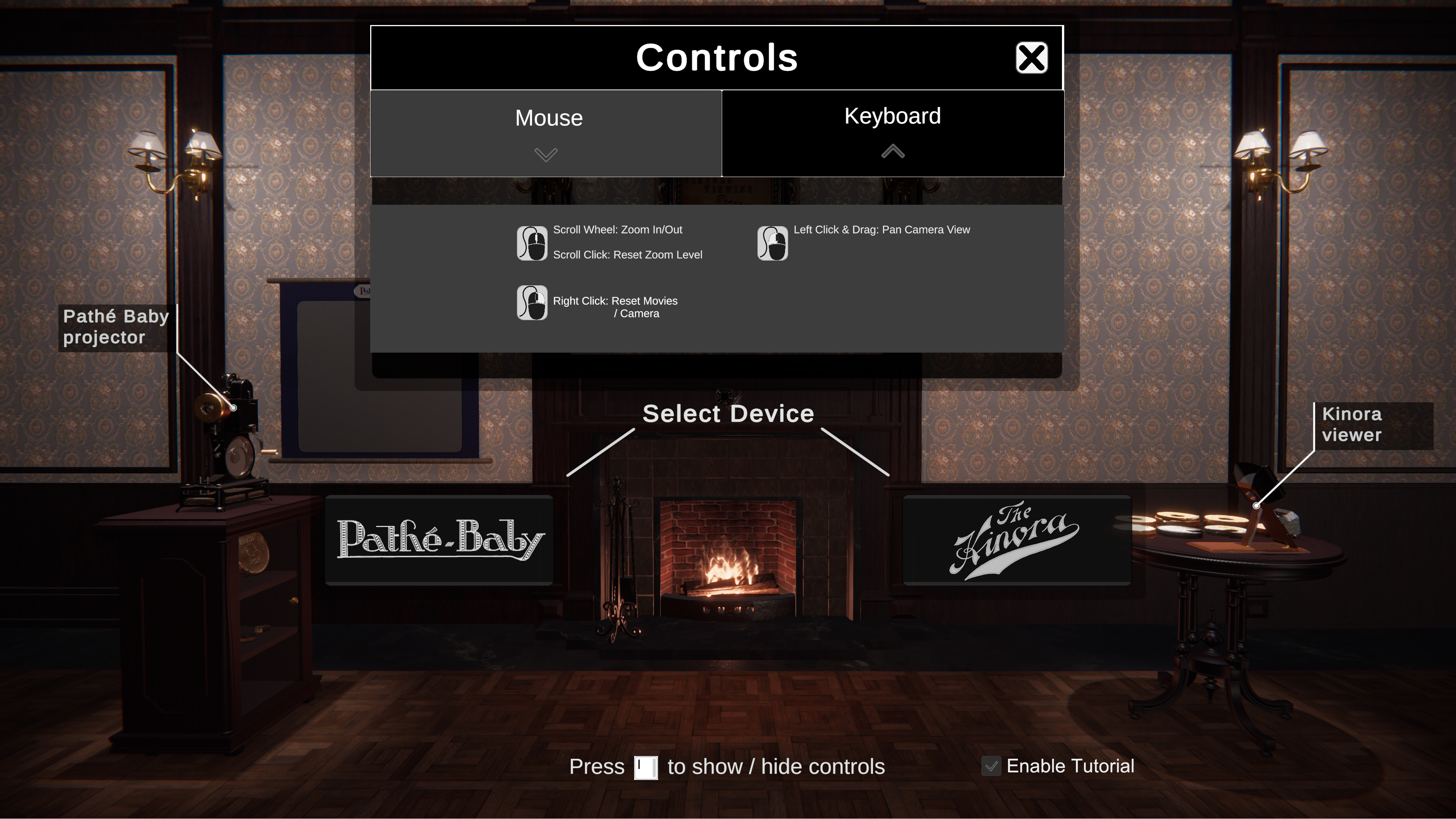
The project was presented at the Digital Humanities Benelux 2023 international conference, as a poster presentation, offering also, a hands-on demonstration of the application. During the conference presentation, user experience (UX) data was collected from the participants and audience of the conference, later to be used for improving the user experience. Additional insights were extracted from digital ethnography sessions, during which users used the application in its entirety while at the same time commenting on their thoughts, pains and likings around it. These insights were used to further improve the application, by adding more effective tutorial tips, and generally improving menu semantical enrichment, functionality and animations, in its latest version.
Read the peer-reviewed article in the DHBenelux Journal.
Download the application from Zenodo.