CloudClass
VR/XR Teaching Platform
“CloudClass is a ‘Low Cost, Mobile, Cloud & Template Based Augmented Reality Studio for Education’. Educators can create and offer Augmented and Virtual Reality learning environments to learners in this ‘online studio’. The CloudClass technology ‘teleports’ the teacher and student to a virtual learning environment.”
Visit CloudClasscloudclass.brainstorm3d.comPromotor: Prof. dr. Ronald Klemke
Supervisor: Prof. dr. Renate de Groot
PhD Candidate: Kateryna Holubinka
Website: cloudclass.brainstorm3d.com
Project Page: Open University of the Netherlands
Project Description
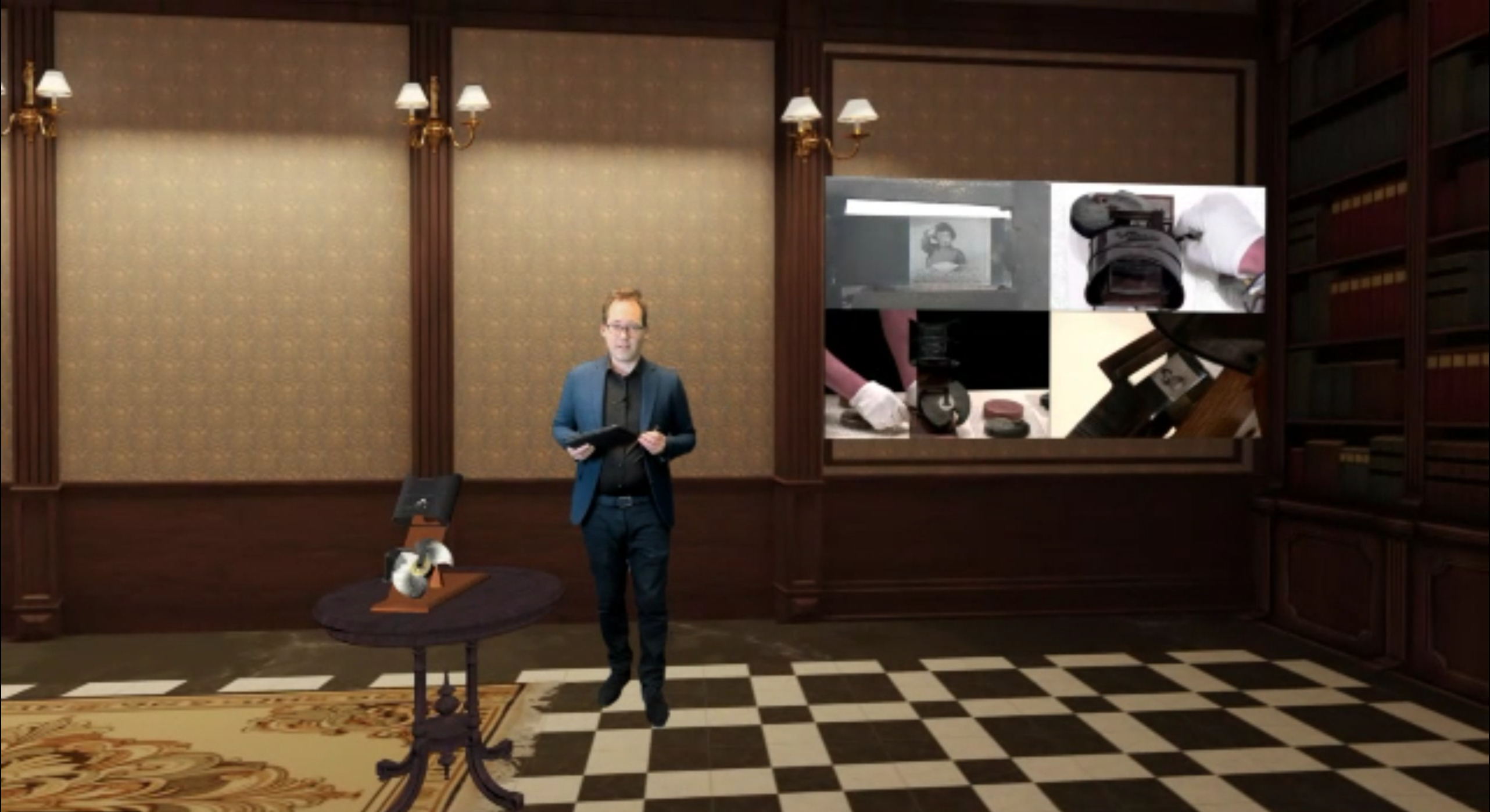
CloudClass is an accessible VR/XR - 3D teaching platform that lets educators perform teaching sessions within customizable virtual environments (such as classrooms, libraries, studios, or fully imported scenes), delivered as live or pre‑recorded lessons. The underlying system (the Edison application, that is based on Unreal Engine 4) supports custom created, editable backgrounds, camera presets for dynamic viewpoints, full‑body or seated green‑screen capture, and the ability to bring multiple speakers into the same virtual space—up to five speakers in the same virtual set. A built‑in virtual display allows teachers to interact in real time with slides, videos, and even 3D models. Designed to run on standard laptops or mobile devices, CloudClass affords educators with the capabilities to create engaging, immersive learning experiences, with minimal setup and almost no post‑production.
Contribution
My contribution to this project was initially of a more technical nature, namely aimed at the creation of the 3D virtual set and the educational 3D models, and additionally to provide technical assistance during the live recording and broadcasting sessions. My subsequent theoretical contributions are related to qualitative research data analysis for inter‑subjectivity as well as co‑authoring of the peer‑reviewed publication.
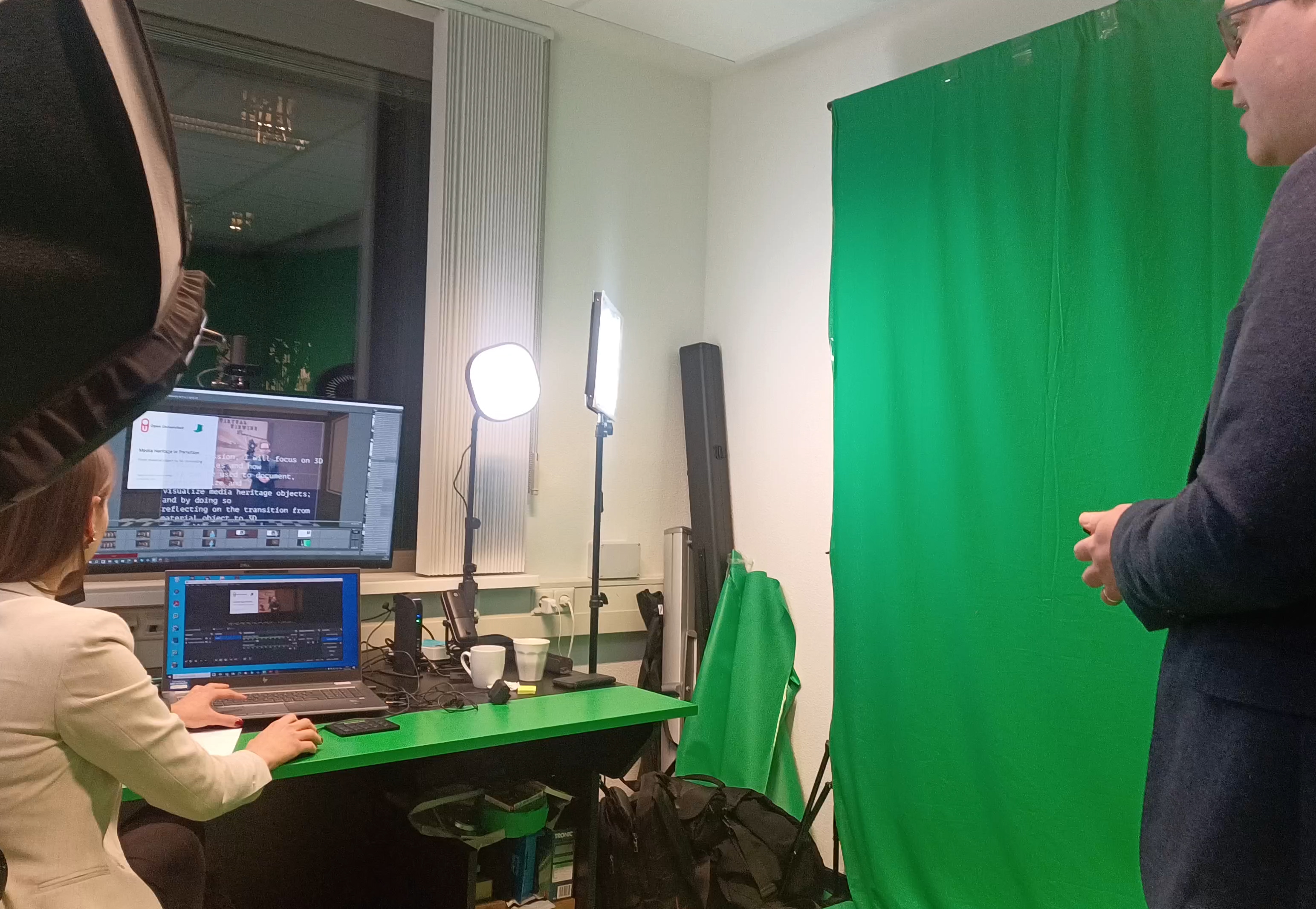
The manually modelled 3D objects used in the teaching sessions, had to be adapted and optimized for use with the proprietary software. Similarly, the 3D virtual set was made using advanced projection techniques, to maximize performance and aesthetic, despite the lower 3D rendering capabilities of the XR application. More specifically, because the 3D room model on which the virtual set was based, was high in polygon count, therefore performance-intensive, it was instead captured as a panoramic equirectangular camera render, projected as an environment texture. In this manner, the room maintains all its realistic lighting straight from the 3D design software (Blender) while maintaining the polygon count to a minimal, bringing minus impact during live performance. During the live recording and broadcasting sessions, I was in charge of camera view and color adjustments, as well as directing the scene and the speaker.
Visit the CloudClass website at cloudclass.brainstorm3d.com.
View the project page at the Open University of the Netherlands.